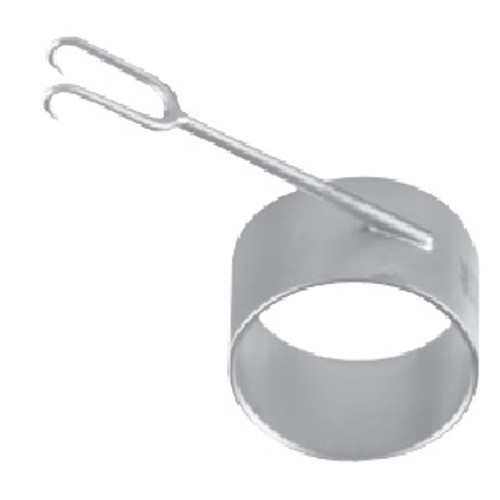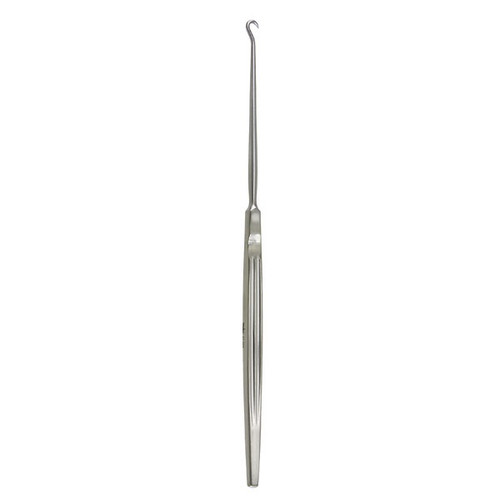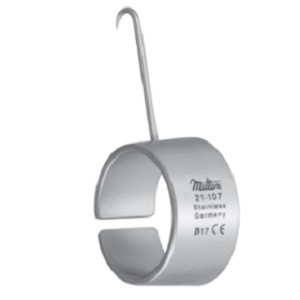

- A specialized, wearable retraction instrument designed primarily for plastic, reconstructive, and cosmetic surgical procedures, this device fits directly over the surgeon's finger, enabling hands-free soft-tissue stabilization and skin traction
Uses
- Rhinoplasty & Septoplasty:
- Used to hold back nasal cartilage, skin flaps, and mucosal linings during delicate nasal reconstructions
- Cleft Lip and Palate Repair:
- Deployed to precisely retract skin and muscle layers, a technique heavily championed by the instrument's namesake, pioneering plastic surgeon Dr. D. Ralph Millard
- Facial Plastic Surgery:
- Ideal for blepharoplasties, facelifts, and local flap reconstructions where delicate, close-quarters skin traction is required
Features
- Wearable Thimble Design:
- Features an ergonomic finger loop that mounts securely onto the surgeon’s thumb or index finger
- Single Sharp Prong:
- Engineered with one sharp prong that securely anchors into tissue without slipping
- 5.2mm Hook Diameter:
- The small, curved hook profile provides a highly targeted 5.2mm width for localized control
- Compact Size:
- Features a concise working depth profile of 19.2mm (approx. 5/8 inches)
- German Stainless Steel:
- Crafted from reusable, highly durable, non-sterile metal that easily handles standard autoclave cycles
Benefits
- Maximized Surgical Efficiency:
- By wearing the retractor on a finger, the primary surgeon can retract tissue and manipulate flaps independently, reducing the need for an additional surgical assistant
- Pinpoint Tissue Control:
- The sharp single prong ensures an aggressive yet highly controlled hold on fine skin edges, preventing slipping and avoiding unnecessary shearing forces
- Atraumatic Precision:
- The 5.2mm micro-sized profile ensures that localized structural retraction causes minimal trauma to surrounding delicate tissue beds
- Excellent Tactile Feedback:
- Placing the retractor directly over the digit allows the surgeon to feel the exact tension and resistance of the skin, significantly lowering the risk of tearing fragile skin flaps