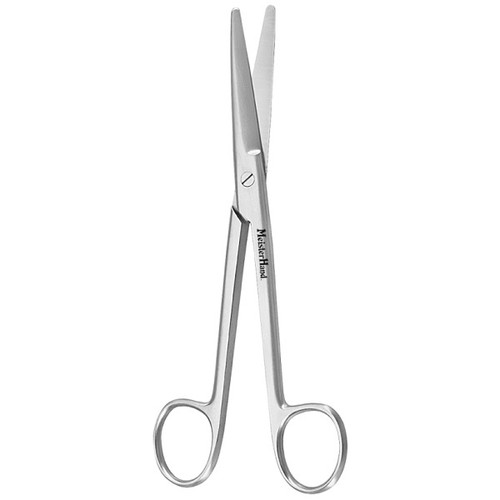
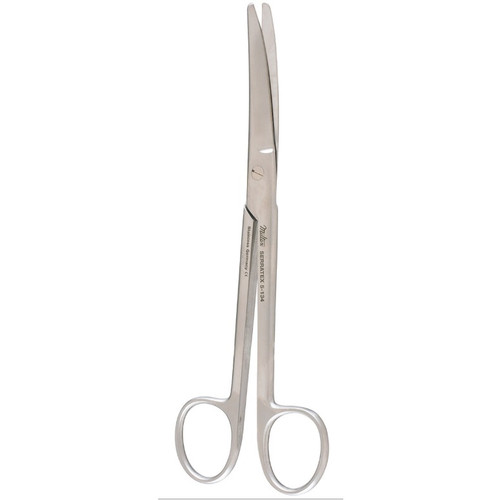
- Heavy-duty, operating-room-grade surgical shears, specifically engineered with standard beveled, straight blades to cut through dense, high-resistance bodily tissues near the surface of a wound
Uses
- Dense Tissue Dissection:
- Cutting and separating thick, tough soft-tissue structures such as muscle layers, fibrous fascia, tendons, and ligaments
- Suture Management:
- Efficiently trimming tough, thick structural sutures (like polydioxanone or braided silk) near the skin surface
- General & Specialized Surgery:
- Serving as a foundational tool on standard trays for laparotomies, orthopedic interventions, and podiatry
- Animal Health & Research:
- Extensively utilized across veterinary surgery and lab settings for robust tissue manipulation
Features
- 6¾-Inch Straight Profile:
- Provides deeper cavity reach and a longer cutting surface per stroke compared to compact 5.5-inch models
- Standard Beveled Blades:
- Designed with a thickened blade cross-section to generate clean, high-leverage shearing force without blade bowing
- Blunt/Blunt Tip Configuration:
- Rounded tips safeguard the operative field, preventing accidental stabs into hidden underlying organs or vessels
- Fully Tempered Precision Box Lock:
- A rugged screw-lock pivot configuration maintains exact blade alignment over years of intense force
- OR-Grade German Stainless Steel:
- Forged from premium medical-grade German metal with a brushed satin finish to eliminate aggressive glare under operating lights
Benefits
- Maximum Cutting Leverage:
- The heavy-duty structure delivers maximum torque to easily slice dense tissues that would nick or stall delicate Metzenbaum shears
- Reduced Hand Fatigue:
- Wide, ergonomically balanced finger rings improve weight distribution and clinician physical comfort during long surgical procedures
- Minimized Accidental Tissue Trauma:
- Pushing the closed, blunt tips between tissue planes allows for clean "blunt dissection" without unintended lacerations
- Long Asset Lifespan:
- High metallurgical hardness combined with chemical passivation prevents micro-corrosion, rust, and dulling across hundreds of autoclave sterilization cycles