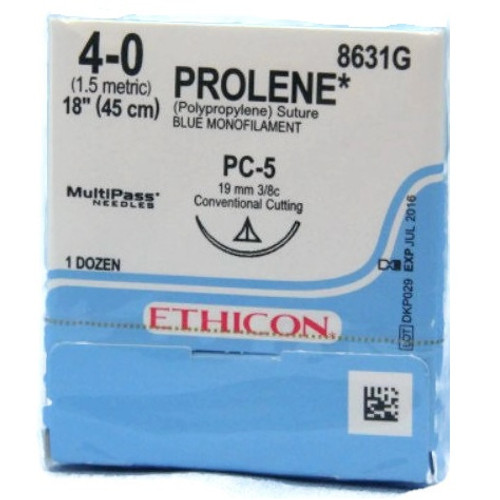
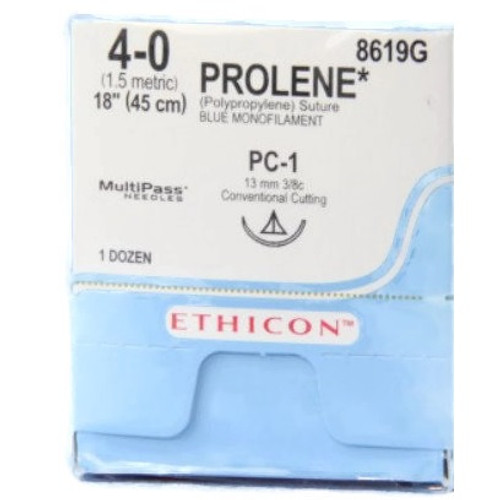
- Non-absorbable suture used for soft tissue closure in various medical and dental surgical procedures
Uses
- General and skin closure:
- This versatile suture is used for ligating and approximating soft tissues
- Plastic surgery:
- It is commonly used for skin closure and other plastic surgery procedures
- Ophthalmology and microsurgery:
- The smooth monofilament and fine 4-0 size make it suitable for delicate procedures, including ophthalmic surgery
- Cardiovascular surgery:
- It can also be used in certain cardiovascular surgical procedures where a fine, non-absorbable suture is required
Features
- Non-absorbable:
- The suture provides long-term wound support and is not broken down by the body
- Monofilament:
- The polypropylene material is a single filament, which is smooth and passes through tissue easily with minimal drag
- High tensile strength:
- The suture offers superior tensile strength compared to other monofilaments
- Secure knots:
- The material is easy to handle and allows for secure knot tying
- PC-31 needle:
- The 18mm, 3/8 circle precision reverse cutting PC-31 needle is honed to a unique multiedged point for greater ease of penetration
- Seamless attachment:
- The needle is drilled for a smooth, seamless junction with the suture, reducing tissue disruption during passage
- Sterile and disposable:
- Each suture is sterile and packaged in a unique double-sterile barrier packaging for single use to ensure patient safety
- Color:
- The suture is dyed blue for easy visibility
Benefits:
- Superior Handling:
- Despite being a monofilament, it is engineered for better knot security with fewer throws compared to standard materials
- Minimal Tissue Trauma:
- The needle-to-suture juncture is drilled for a seamless attachment, providing a smoother transition through tissue with less disruption
- High Tensile Strength:
- Polypropylene offers tensile strength superior to other true monofilaments, ensuring reliable wound security during the healing process
- Infection Resistance:
- The smooth monofilament surface does not harbor bacteria, significantly reducing the risk of "wicking" or surgical site infections