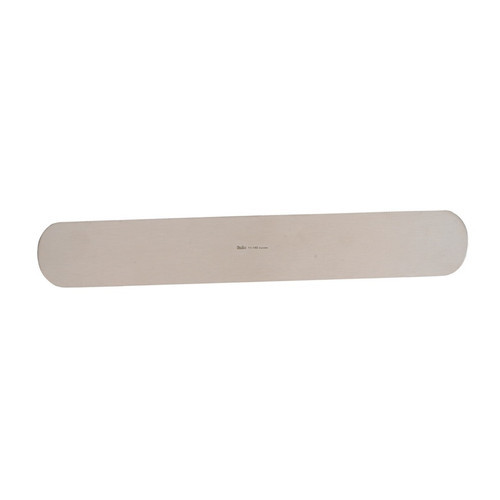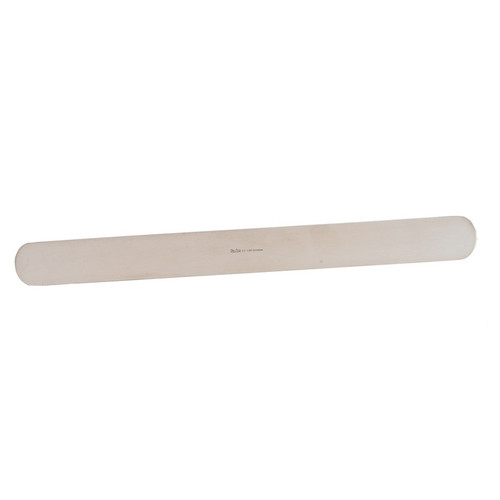

- Engineered to manually pull back deep tissues, muscle walls, and internal organs to provide a clear, unobstructed view of the surgical site
Uses
- Deep Tissue Retraction:
- Holds back heavy abdominal or thoracic walls during invasive procedures
- Laparotomy Procedures:
- Widely deployed as a primary laparotomy instrument to shield, depress, and move aside internal organs like the liver or intestines
- Organ Protection:
- Safeguards delicate internal structures from accidental nicks or injuries while deep incisions or sutures are being made
- Veterinary and Animal Health:
- Extensively utilized in large and small animal veterinary surgeries for deep exploratory procedures
Features
- Malleable Strip Structure:
- Constructed as a completely flat, flexible metal ribbon that can be bent, curved, or molded into custom shapes on the fly
- 1-1/4" x 13" (3.2cm x 33cm) Dimensions:
- A specialized, intermediate width and extended length optimized for deep abdominal cavity reach
- German Stainless Steel Craftsmanship:
- Forged using premium surgical steel, allowing it to bend repeatedly without snapping or structurally weakening
- Smoothly Beveled Edges:
- Designed with thoroughly rounded, blunt perimeter margins to protect tissue layers from trauma
- Matted Satin Surface:
- Finished with an anti-glare coat to prevent harsh reflections from overhead surgical lights
Benefits
- Custom Fit Anatomy:
- Because the tool is malleable, surgeons can precisely adapt the ribbon's curve to match the specific physical borders of a patient's incision or organs
- Atraumatic Tissue Control:
- Smooth, non-sharp edge geometries ensure that high pressure can be applied against slippery organs without bruising, tearing, or perforating them
- Cost-Efficient Reusability:
- The premium German steel handles repeated mechanical bending, deep ultrasonic cleaning, and high-heat autoclave cycles without suffering metal fatigue
- Hands-Free Adaptability:
- Can be adjusted to rest over assistant hands or fixed setups easily, reducing surgical team fatigue during long procedures