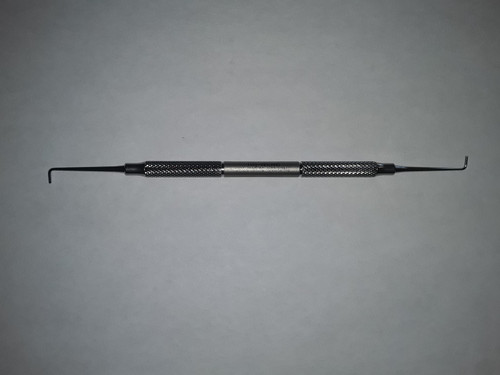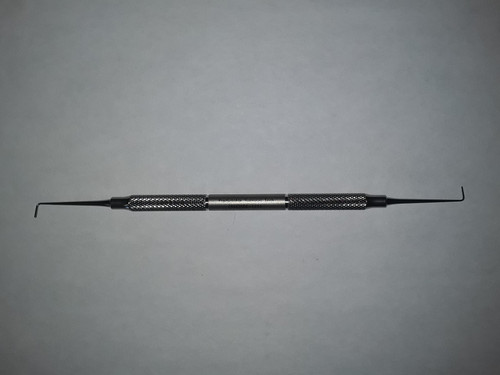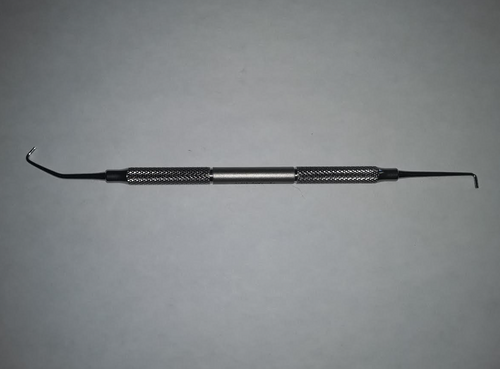

- A heavy-duty, rigid endodontic hand instrument built to handle heavy compaction workloads, sealing the widest parts of the root canal and forming a dense barrier against coronal leakage
Uses
- Coronal Third Compaction:
- Acts as the primary plugger for the wide, upper sections of prepared root canals, delivering massive vertical force to compact the bulk of the gutta-percha mass
- Initial Warm Downpack Stage:
- Used immediately after severing the primary gutta-percha master cone to compress the softened material right at the canal entrance or orifice
- Bulk Carrier Backfilling:
- Compresses large, injected increments of thermoplasticized gutta-percha or heavy bioceramic obturation pastes into a void-free, solid mass
- Large Perforation and Apexification Repairs:
- Ideal for packing Mineral Trioxide Aggregate (MTA) or bioceramic putties into wide open apexes, root perforations, or extensive internal resorption defects
Features
- Maximum-Rigidity Stainless Steel:
- Forged from high-grade stainless steel to ensure zero flexing or bending, giving the operator maximum leverage and force transfer
- Calibrated 0.8mm Flat Condenser Tip:
- Features a wide, perfectly flat working face designed to uniformly distribute high vertical pressures across large volumes of material without cutting or slipping through
Benefits
- High-Hydraulic Density:
- The 0.8mm surface area forces warm obturation material aggressively into wide lateral canals, fins, and anatomical irregularities commonly found in the pulp chamber floor and coronal root anatomy
- Zero Instrument Deflection:
- The unyielding stainless steel build completely eliminates instrument buckling, ensuring that 100% of the clinician's hand pressure translates into direct downward apical and lateral force
- Superior Coronal Seal:
- By ensuring maximum compaction at the canal orifice, it minimizes the risk of microleakage and secondary bacterial contamination from the oral cavity
- Extreme Structural Durability:
- Built to withstand heavy daily clinical use, showing incredible resistance to warping, tip deformation, and repeated high-temperature autoclave sterilization cycles