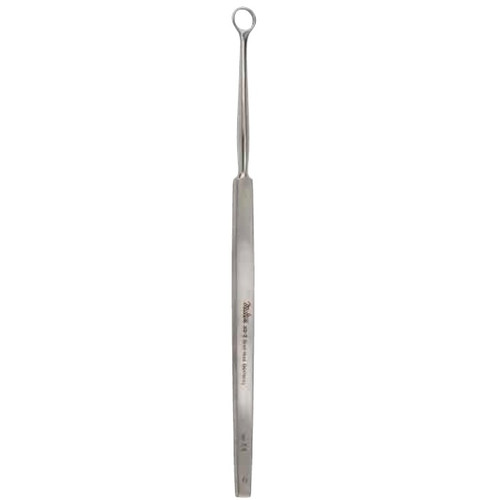
- A specialized surgical instrument used primarily in dermatology for scraping and removing skin tissue
Uses
- Tissue Removal:
- Used to scrape or excise benign skin lesions, such as warts, seborrheic keratoses, and actinic keratoses
- Wound Debridement:
- Employed to remove dead or infected tissue from corns, calluses, or scars
- Biopsy Assistance:
- Sometimes used in conjunction with other tools to obtain skin-tissue specimens for further analysis
Features
- Tip Specifications:
- Features a 3mm round loop tip that is semi-sharp and fenestrated (open in the center) for efficient tissue collection
- Handle Design:
- Equipped with a 5-1/2 inch (142 mm) flat handle designed for precise control and ergonomic grip during delicate procedures
- Material:
- Manufactured from high-quality German surgical-grade stainless steel, ensuring durability and resistance to corrosion
- Configuration:
- A single-ended, reusable instrument typically sold individually or in specialty sets
Benefits
- Precision:
- The symmetrically ground beveled edge allows for clean, sharp cuts that minimize trauma to surrounding healthy tissue
- Enhanced Control:
- The flat, textured handle provides a secure grip, reducing hand fatigue and improving the accuracy of tissue removal
- Reliability:
- As an OR-grade instrument, it is designed to withstand repeated sterilization and maintain its cutting performance over a long service life
- Standardized Sizing:
- Clearly marked tip sizes (3mm) facilitate quick identification in busy clinical or surgical environments