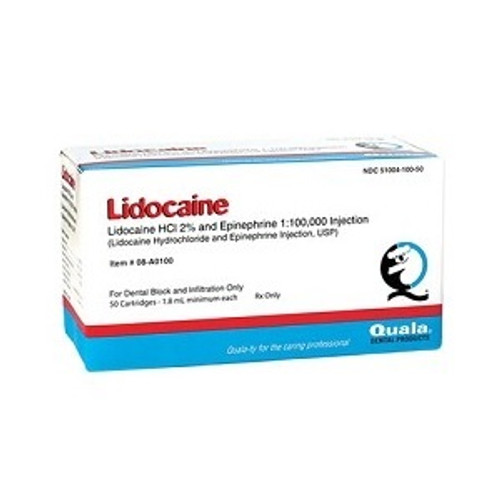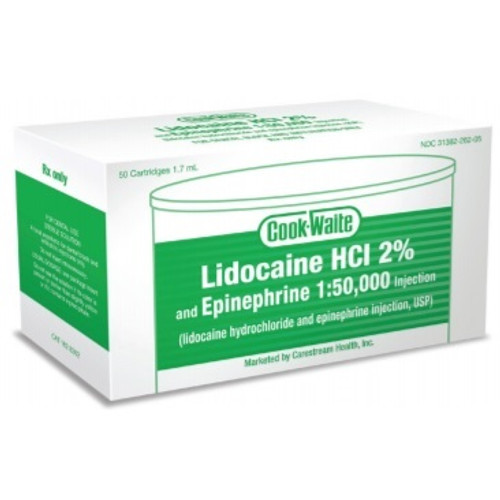
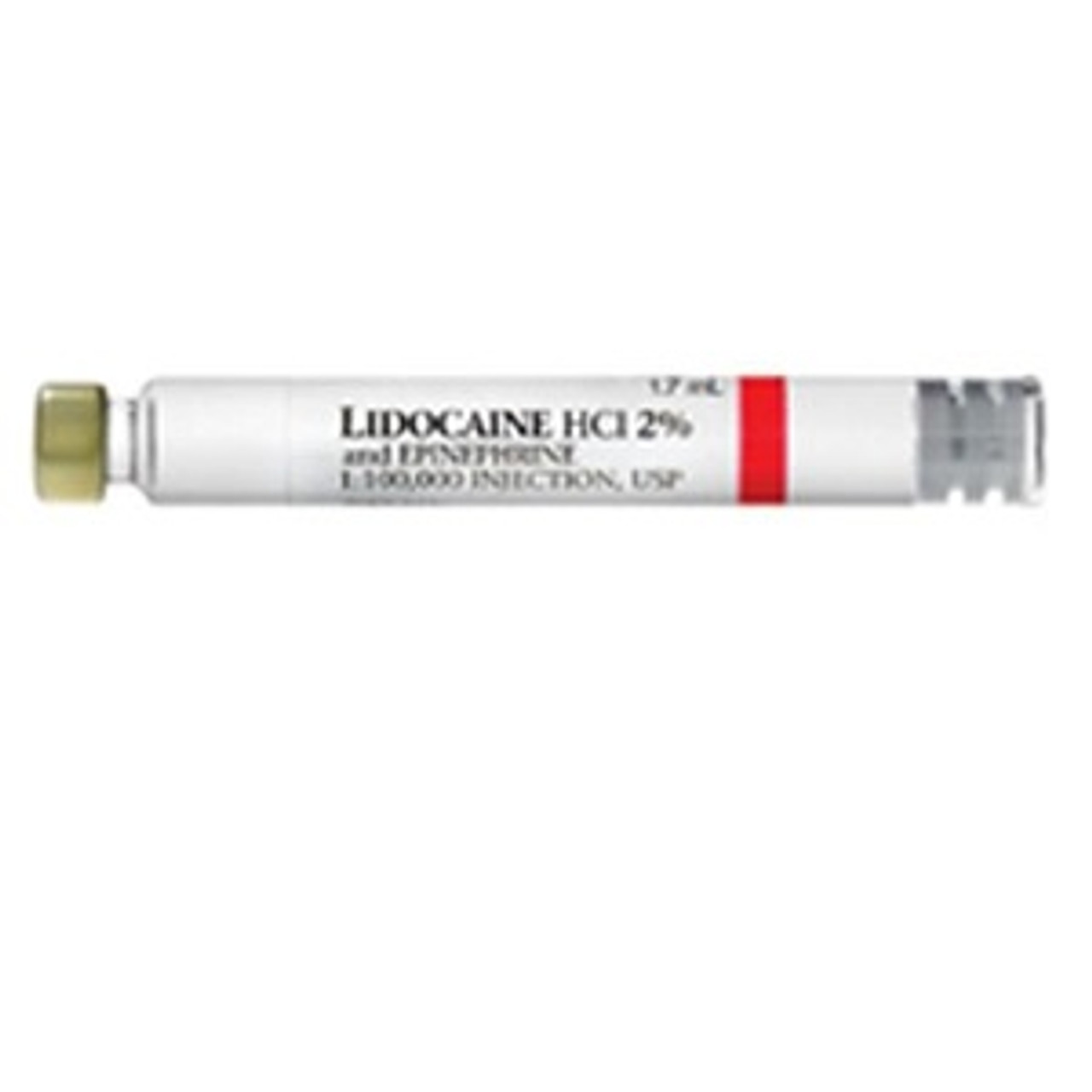
- A local anesthetic cartridge containing Lidocaine HCl 2% with Epinephrine 1:100,000. It is a primary injectable used in dental practices to provide rapid and reliable pain control during various clinical procedures
Uses
- Routine Restorations:
- Used during the placement of fillings to ensure patient comfort
- Oral Surgery:
- Frequently employed for tooth extractions and other minor surgical interventions in the mouth
- Endodontic Treatment:
- Provides necessary numbing for root canal therapy and related procedures
- Nerve Block & Infiltration:
- Suitable for both localized infiltration and larger area nerve block techniques
Features
- Concentration:
- Formulated with 2% Lidocaine HCl (anesthetic) and a 1:100,000 dilution of Epinephrine (vasoconstrictor)
- Red Color-Coding:
- The cartridges and labeling are color-coded red for quick identification of the specific anesthetic formula and strength
- Cartridge Design:
- Supplied in 1.7 mL glass cartridges featuring a validated siliconization process for smooth, consistent injection
- Protective Packaging:
- Cartridges are provided in blister packs to prevent glass-to-glass contact and protect the solution from light and air
- Safety Standards:
- Manufactured to U.S.P. specifications and is not made with natural rubber latex to prevent allergic reactions
Benefits
- Rapid Onset:
- Numbing action typically begins within a few minutes of injection, allowing procedures to start quickly
- Intermediate Duration:
- Provides reliable pulpal anesthesia for approximately 55–65 minutes via infiltration and 80–90 minutes through nerve blocks
- Hemostasis Control:
- The epinephrine constricts blood vessels at the site, which helps control bleeding and maintains a clear operating field for the dentist
- Enhanced Patient Experience:
- Delivers profound anesthesia for improved patient comfort during potentially painful procedures
- Reduced Toxicity Risk:
- The vasoconstrictive effect of epinephrine slows the absorption of lidocaine into the bloodstream, increasing local effectiveness while decreasing the risk of systemic toxicity