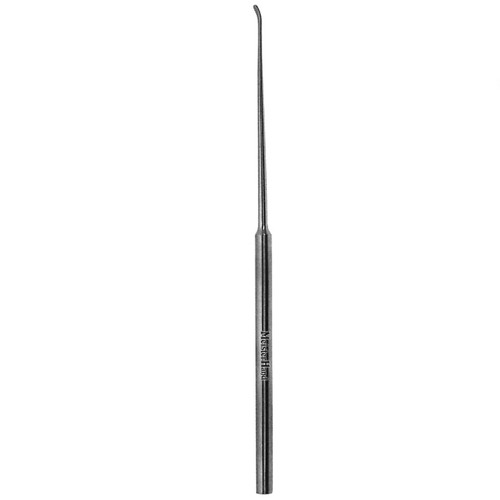
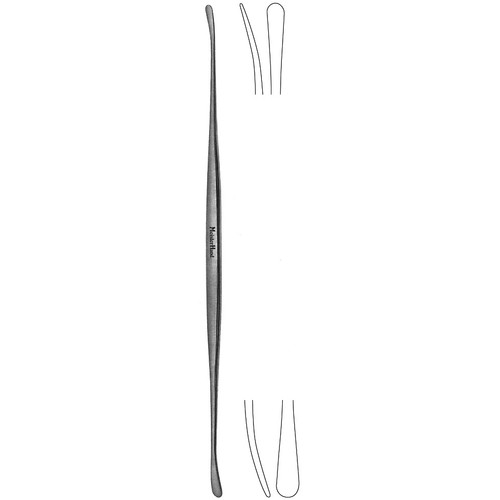
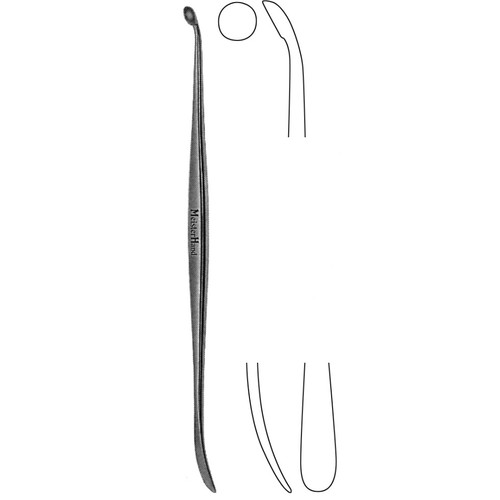
- A specialized neurosurgical instrument designed for the delicate separation of tissues and bones
Uses
- Neurosurgical Procedures:
- Primary use is for dissecting and separating delicate tissues, such as the dura mater from the skull during a craniotomy
- Orthopedic & Veterinary Surgery:
- Utilized in spinal or bone-related surgeries to retract or elevate tissue away from bone surfaces
- General Tissue Dissection:
- Used across various specialties where a blunt, controlled separation of tissue layers is required
Features
- Penfield #4 Style:
- A specific standard pattern known for being a single-ended instrument with a blunt, slightly curved tip
- Tip Dimensions:
- Features a 2.8mm to 3mm wide blunt tip
- MeisterHand® Grade:
- Manufactured to high German standards (MeisterHand line), ensuring a premium "surgical feel" and precision
- Length:
- Measures approximately 8 inches (20.3cm) to 8.75 inches in total length
- Construction:
- Crafted from high-quality, surgical-grade stainless steel with a satin finish to reduce glare in the operating room
Benefits
- Trauma Reduction:
- The blunt, slightly curved tip allows surgeons to gently elevate and separate tissue with minimal risk of accidental perforation or tearing
- Precision Control:
- The single-ended, light-pattern design provides enhanced tactile feedback and maneuverability in tight surgical spaces
- Durability:
- Made from German-forged stainless steel, the instrument is highly resistant to corrosion and maintains its integrity through repeated sterilization cycles
- Reduced Eye Strain:
- The satin finish minimizes reflection from bright surgical lights, improving visibility for the surgeon