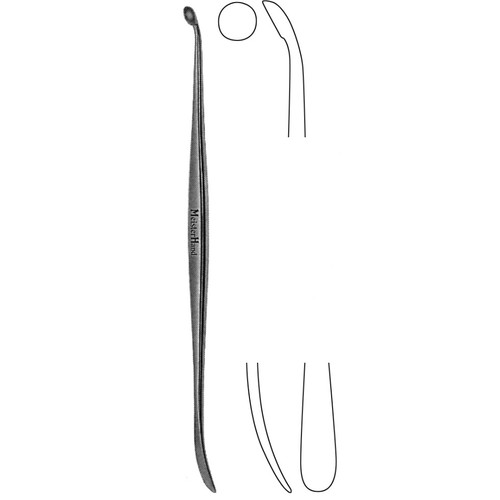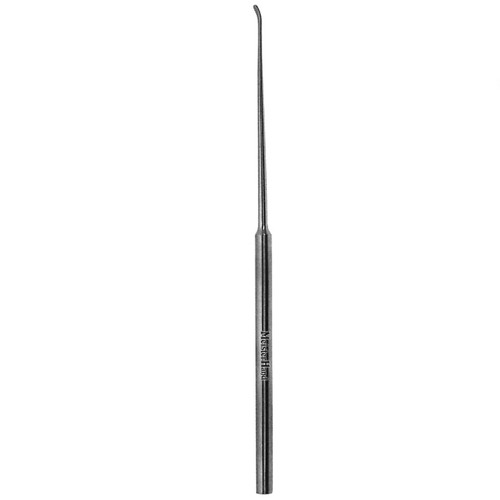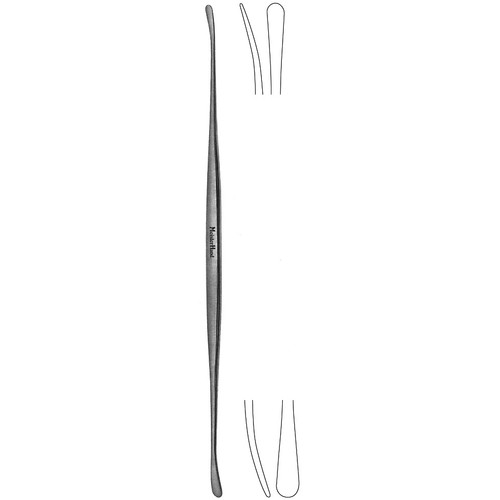

- An O.R.-grade surgical instrument used to separate tissues and dissect fine structures, particularly in neurosurgery
Uses
- Tissue Separation:
- Primarily used for separating delicate tissues during surgical procedures
- Fine Dissection:
- Applied in dissecting fine anatomical structures where precision is crucial
- Neurosurgery:
- A key instrument in neurosurgical procedures
Features
- Double-Ended Design:
- The instrument has two working ends, with different dimensions, offering versatility in a single tool
- Blade Widths:
- One end has a 7mm wide blunt blade and the other has an 8mm wide blunt blade
- Blade Curvature:
- Both blades are described as slightly curved and blunt.
- Length:
- The overall length of the dissector is 11.5 inches (29.4cm), providing ample reach
- Material:
- Made from high-quality, O.R.-grade German stainless steel
Benefits
- Versatility:
- The double-ended design provides two different blade sizes and styles in one instrument, reducing the need to switch tools during a procedure
- Precision:
- The design is specifically made for delicate procedures, offering the necessary control and precision for separating fine structures
- Durability:
- Made from surgical-grade German stainless steel, it is highly durable and resistant to corrosion, capable of withstanding repeated sterilization cycles
- Optimal Reach:
- The long, 11.5-inch length is beneficial for reaching deep or otherwise difficult-to-access surgical sites
- Cost-Effective:
- Described as competitively priced and ideal for acute care settings