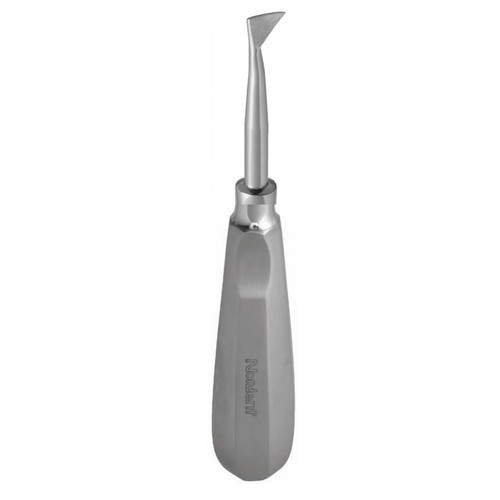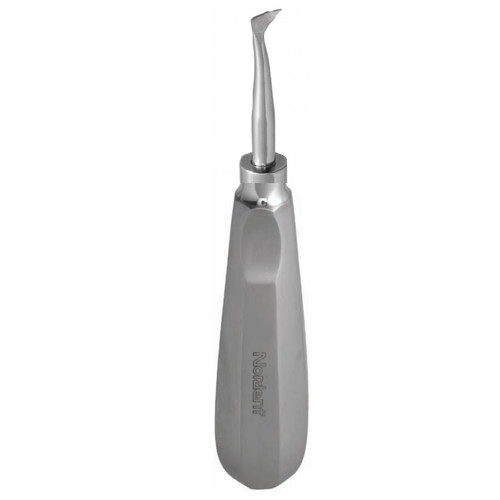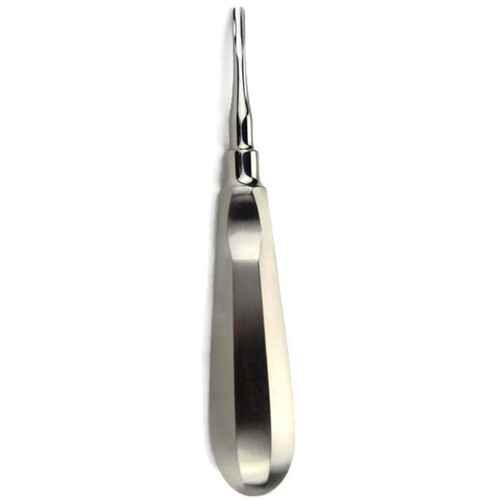

- Used to loosen the tooth from the periodontal ligament and ease extraction
Uses
- Mandibular Molar Root Removal:
- Specifically designed to engage and remove fractured or retained root fragments in the lower molar region
- Rotational Luxation:
- Uses a "wheel and axle" mechanical principle to apply controlled twisting force, severing the periodontal ligament
- Inter-Radicular Leverage:
- Particularly effective after one root of a multi-rooted tooth has been removed; the tip uses the empty socket as a fulcrum to elevate the remaining root.
Features
- Triangular Working Tip:
- Features a sharp, right-angled blade designed for maximum purchase power on the root surface
- Ergonomic Handle:
- Equipped with an "Apical" or rounded handle that provides a secure, comfortable grip to reduce hand fatigue during high-torque procedures
- Surgical Stainless Steel:
- Forged from high-grade stainless steel for superior strength, corrosion resistance, and long-term durability
- Autoclavable:
- Designed for repeated sterilization without compromising the integrity of the tip or handle
Benefits
- Precision and Control:
- The angled, acute tip allows for better access to tight posterior areas compared to standard straight elevators
- Atraumatic Extraction:
- Minimizes trauma to surrounding alveolar bone and soft tissue by providing efficient leverage with less applied brute force
- Procedural Efficiency:
- Reduces surgery time by facilitating the removal of stubborn or sectioned molar roots that are difficult to reach with forceps
- Cost-Effective Durability:
- Often available in economical versions with lifetime warranties against material defects