
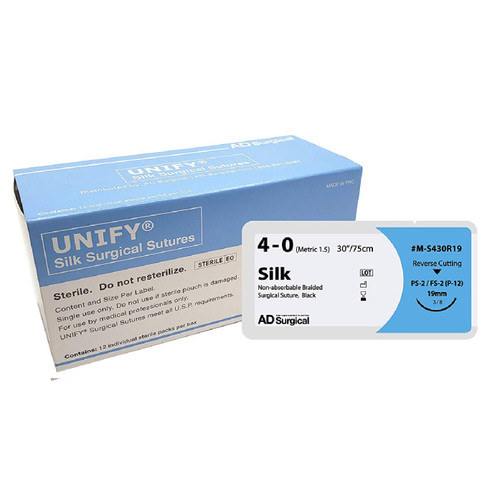

- A non-absorbable, natural organic suture designed for general soft tissue approximation and ligation, Compatible with Ethicon PermaHand, Covidien Sofsilk
Uses
- General Soft Tissue Approximation:
- Ideal for closing skin and internal tissues that require long-term support
- Dental Procedures:
- Commonly used by dentists for oral surgeries and gum tissue management due to its ease of use and superior knot security
- Ophthalmic Surgery:
- Specifically indicated for delicate eye procedures where precision is paramount
- Laceration Repair:
- Suitable for larger incisions and skin closures where a non-absorbable material is preferred
Features
- Thread Composition:
- A 18-inch (45cm) black braided silk thread composed of the organic protein fibroin
- Needle Specification:
- Features a 19mm, 3/8 circle reverse cutting needle (comparable to FS-2, PS-2, and C-6)
- Silicone Coating:
- Both the thread and needle are coated with silicone to ensure smooth flow through tissue and atraumatic penetration
- Drill End Press Fit:
- A specialized attachment between the thread and needle provides maximum pull-out strength
- Longevity:
- Classified as non-absorbable with a tensile strength duration of approximately one year
Benefits
- Superior Handling:
- Braided silk is widely regarded by clinicians as one of the easiest materials to work with, offering high flexibility and a soft feel
- Optimal Knot Security:
- The braided structure and silicone coating are engineered to maintain secure knot tie-downs while preventing slippage
- High Visibility:
- The black dyed thread provides excellent contrast against tissue, assisting the surgeon during precise placement and eventual removal
- Minimal Tissue Trauma:
- Ultra-sharp needle points and the smooth silicone coating reduce "sawing" and resistance during tissue passage


