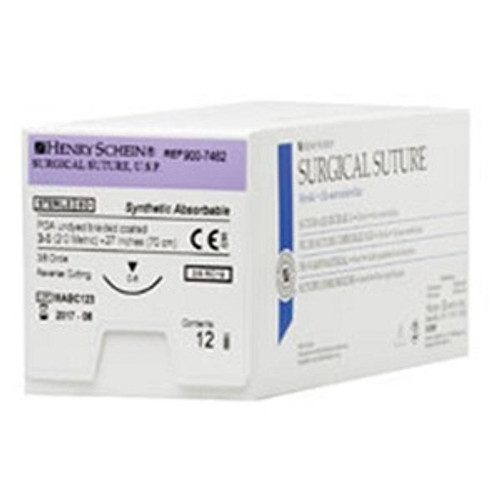
- A synthetic surgical suture is designed for versatile use in general soft tissue approximation and is particularly valued for its smooth handling and predictable absorption
Uses
- Soft Tissue Approximation:
- Ideal for general wound closure where a temporary, absorbable support is required
- Surface Closures:
- Specifically indicated for skin and mucosa closings across most areas of the body
- Specialized Surgery:
- Frequently used in OB/GYN, urology, and gastrointestinal procedures
- Dental Applications:
- Often utilized in oral surgery due to its predictable strength loss and patient comfort
Features
- Material Composition:
- Constructed from Polyglycolic Acid (PGA), a synthetic absorbable monofilament polymer
- Needle Specifications:
- Features a DS-24 precision reverse cutting needle, which is a 3/8 circle needle measuring 24mm in length
- Absorption Profile:
- The suture is designed to break down via hydrolysis and is typically fully absorbed between 50 and 90 days
- Strength Retention:
- It retains approximately 50% of its initial tensile strength at 14 days and 20% at 21 days
- Physical Properties:
- Each strand is 27 inches (approx. 69cm) long and is undyed (clear) and uncoated, ensuring minimal visibility under the skin
Benefits
- Minimal Tissue Drag:
- The smooth monofilament surface reduces friction, allowing for atraumatic passage through delicate tissue
- Patient Comfort:
- Because it is bio-absorbable, there is no need for a follow-up appointment for suture removal, which is highly beneficial for pediatric or anxious patients
- Consistent Performance:
- The synthetic nature of the material ensures it does not provoke significant inflammatory reactions, promoting a cleaner healing process compared to natural gut sutures
- Secure Handling:
- Despite its smooth surface, it is designed for excellent knotting ability and secure knot tying