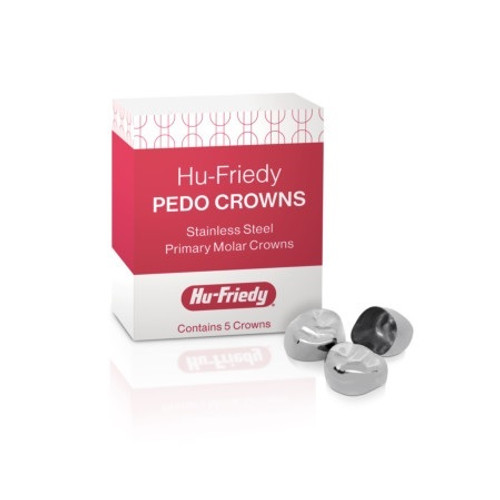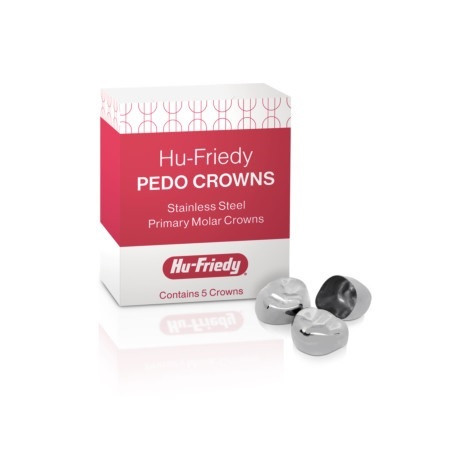

- Stainless steel primary molar crown used in pediatric dentistry for dental restoration
- It is designed for the upper left first primary molar, size #6
Uses
- The primary use of the SSC-ULD6 crown is for the long-term restoration and coverage of a compromised primary first molar in the upper left quadrant of the mouth
- It is indicated in cases involving:
- Extensive decay or dental caries, particularly on proximal surfaces, in young children
- Teeth prone to fracture due to trauma or extreme wear
- A high risk of dental caries where large amalgam or composite fillings are likely to fail
- Restoration for children under the age of four, where they are more likely to last than fillings
Features
- Pre-trimmed and Pre-crimped:
- The crown comes pre-shaped to save the clinician time and effort during placement, often requiring minimal or no additional trimming and crimping
- Accurate Occlusal Anatomy:
- The crown's biting surface mimics the natural anatomy of a primary molar, helping to establish proper occlusion and avoid food retention
- Optimal Occlusal Thickness:
- The material has superior resilience to abrasion and perforation, making it durable for chewing
- Adaptable Gingival Margins:
- The gingival and lateral areas are soft and adaptable, allowing for easier manipulation if minor adjustments are needed
- Specific Sizing:
- It is specifically designed as a size #6 crown for the upper left primary first molar
Benefits
- Efficiency:
- Pre-contoured and crimped surfaces lead to less time spent chairside, allowing for quicker and simpler placement
- Predictable Results:
- The design helps deliver consistent and predictable clinical outcomes compared to large multi-surface fillings that may fail
- Durability:
- As a full coverage, strong metal cap, it is hard to lose or damage and can last until the primary tooth naturally exfoliates
- Proper Function:
- It restores the tooth to proper function, maintains space for developing permanent teeth, and ensures correct occlusion
- Patient Health:
- By providing a reliable, long-lasting restoration, it helps prevent further infection and complications, potentially reducing the number of dental visits for the child