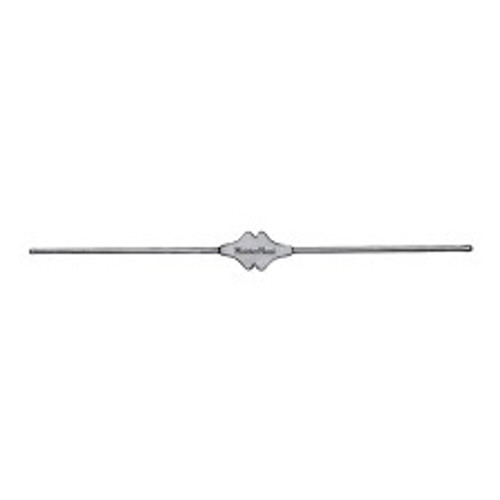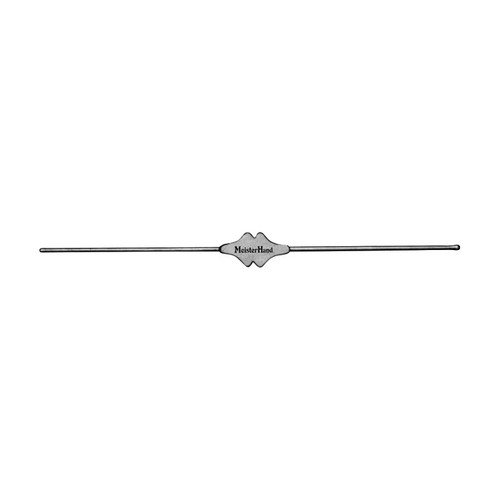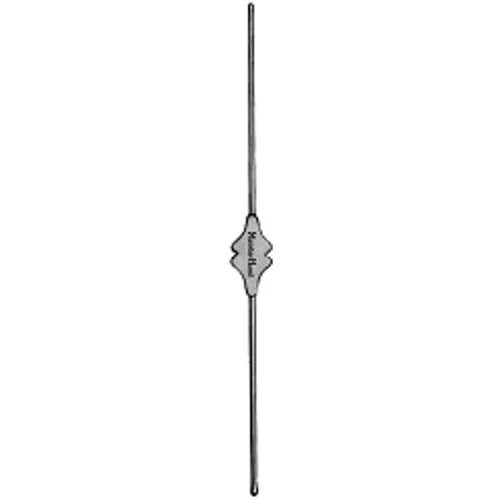

- A 130mm double-ended, reusable, German stainless steel instrument (sizes 3-4) designed for probing and dilating the lacrimal duct, releasing obstructions, and treating tear duct obstructions in adults and children
Uses
- Probing and dilating the lacrimal duct:
- The primary use is to gently pass through and open obstructed tear drainage channels
- Restoring normal tear flow:
- By clearing obstructions in the nasolacrimal ducts, the instrument helps to restore the physiological flow of tears
- Diagnostic procedures:
- It is used to assess where an obstruction is located within the lacrimal system or to confirm patency during related procedures, often in conjunction with irrigation
- Identifying injuries:
- It can help identify canalicular lacerations in eyelid trauma
- Various medical fields:
- While mainly ophthalmic, lacrimal probes can also be used in other surgical contexts (e.g., in some vaginal fistula repairs) to identify or dilate very small tracts
Features
- Double-ended design:
- The instrument has a probe on each end, offering different sizes (sizes 3 and 4)
- Surgical-grade material:
- It is manufactured from high-quality, German stainless steel, which ensures durability and meets high O.R. quality standards
- Optimal length:
- The probe is approximately 5 to 5-1/8 inches (124-130mm) in length, which provides sufficient reach for lacrimal procedures
- Reusable:
- The quality construction allows for repeated sterilization and use
- Blunt, rounded ends:
- The tips are blunt to help prevent injury to delicate duct tissues during insertion and navigation
Benefits
- Effective treatment: The instrument offers a reliable way to clear obstructions, potentially avoiding more invasive procedures in some cases (e.g., in congenital nasolacrimal duct obstruction in infants).
- Precision and control: The solid handle, often featuring a central tongue tie, ensures a strong grip and excellent control for the surgeon, preventing accidental slippage during delicate procedures.
- Accommodates different patients: The double-ended design with two different sizes allows the surgeon to accommodate different patient needs and anatomical variations.
- Cost-effective: As a high-quality, reusable instrument, it provides long-term value for medical facilities