
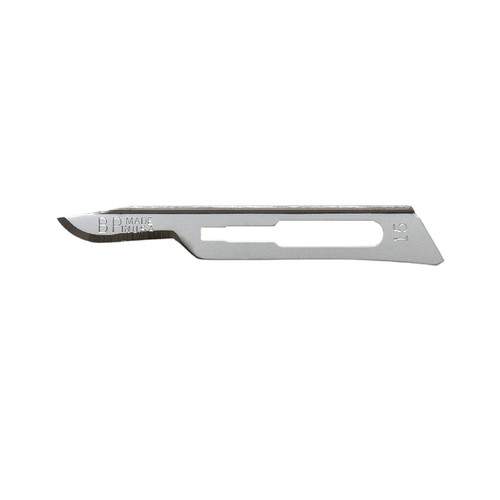

- The blade is a standard instrument in operating rooms for procedures requiring precision since it's known for its precision and reliability in delicate procedures since it has a small, curved cutting edge. which makes it popular for short, precise incisions
Uses
- Medical Procedures:
- It is used for skin lesion excisions, opening coronary arteries, sebaceous cyst removal, and biopsy procedures
- Surgical Specialties:
- It is often used in plastic surgery, dermatology, ophthalmology, and dental surgery
- General Application:
- It is meant for general tissue separation, puncturing, or any procedure that needs a sharp, controlled cut
Features
- Rib-Back Design:
- This feature gives the blade added rigidity and strength, preventing bending for better control
- Carbon Steel Construction:
- This offers sharpness and durability compared to standard stainless steel
- Sterile & Disposable:
- It is individually packaged to maintain sterility and ensure single-use safety
- Standard Compatibility:
- It fits all standard Bard-Parker No. 3 handles and similar surgical handles
- Latex-Free:
- It is safe for use on patients or by practitioners with latex sensitivities
Benefits
- Enhanced Control:
- The Rib-Back design and carbon steel give surgeons consistent sharpness, control, and strength for intricate work
- Improved Outcomes:
- Clean, precise incisions promote faster healing and reduce trauma to surrounding tissue
- Infection Risk Reduction:
- Sterile, individual wrapping ensures the blade is contamination-free upon opening


