
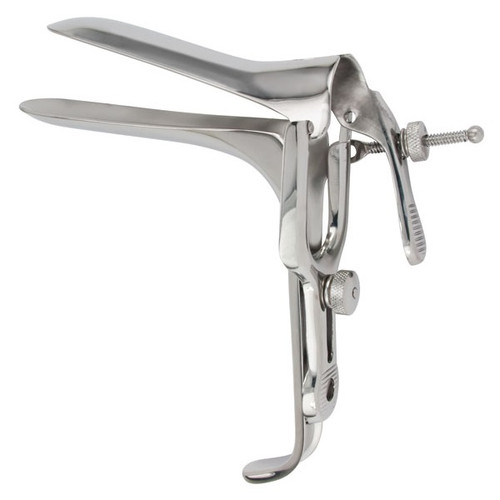

- A standard gynecological instrument used to widen the vaginal canal for examination and diagnostic procedures
Uses
- Routine Pelvic Examinations:
- Used to separate vaginal walls for clear visualization of the vagina and cervix during standard check-ups
- Diagnostic Sampling:
- Facilitates the collection of Pap smears and other cervical biopsies by providing a stable field of view
- Surgical Access:
- Provides essential access for minor gynecological surgeries, such as dilations or the placement of contraceptive devices
- Specialized Patient Care:
- Its larger dimensions make it particularly suitable for parous patients
Features
- Blade Dimensions:
- Features large "duckbill" blades measuring 1-1/2 inches (3.8cm) wide by 4-1/2 inches (11.4cm) long
- Material:
- Manufactured from high-grade Japanese stainless steel
- Design:
- A double-blade, self-retaining duckbill design that allows for hands-free operation once set
- Finish:
- Non-glare satin finish to reduce reflections under bright examination lights
- Non-Illuminated:
- Does not have a built-in light source capability but is designed for use with external lighting
Benefits
- Enhanced Visualization:
- The wide blades provide a significantly clearer field of view compared to narrower Pederson-style speculums
- Patient Safety:
- Features smooth, rounded edges and a high-polish finish to minimize tissue trauma and improve patient comfort during insertion
- Operational Ease:
- The self-retaining mechanism with a thumb-screw adjustment allows for precise control of the opening degree
- Clinical Value:
- Offers a professional "surgical feel" at a mid-range price point, making it cost-effective for high-volume clinics
- Durability:
- Fully autoclavable and reusable; it is backed by a lifetime guarantee against defects in materials or workmanship.


