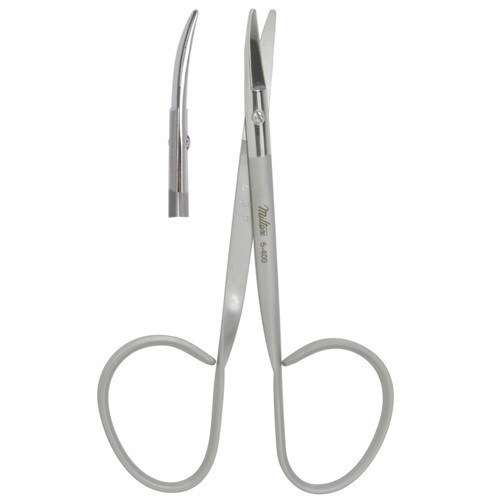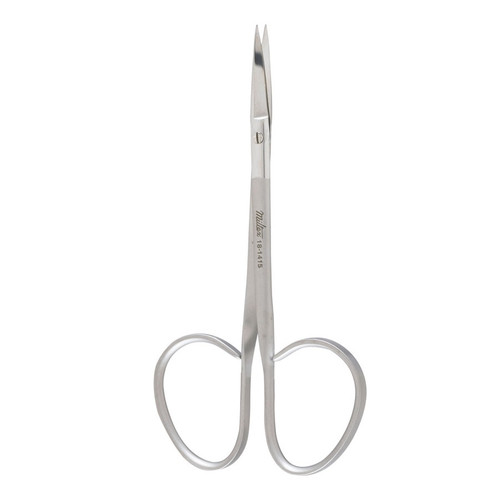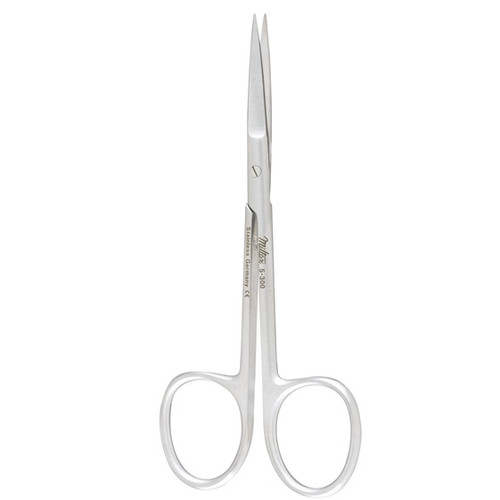

- A precision surgical instrument originally designed for ophthalmic surgery but now widely used for fine dissection in various medical fields
Uses
- Ophthalmic Surgery:
- Primary use for the precise dissection, manipulation, and excision of delicate ocular tissues
- Dermatology:
- Utilized for fine skin procedures and detailed tissue cutting
- General & Plastic Surgery:
- Used in any procedure requiring highly accurate and clean cuts in tight or delicate surgical spaces
- Dental & Veterinary:
- Employed in oral surgeries or veterinary procedures for small-scale tissue manipulation
Features
- Fine, Sharp Blades:
- Specifically designed to provide smooth, exacting cuts for detailed work without tearing or pulling tissue
- Ergonomic Design:
- Features a balanced weight distribution and finger ring handles to reduce hand fatigue during prolonged surgical sessions
- Surgical Grade Construction:
- Forged from high-quality steel to ensure exceptional durability and resistance to corrosion
- Autoclavable:
- Designed to withstand repeated sterilization cycles without losing blade alignment or sharpness
Benefits
- Enhanced Accuracy:
- The straight blade design offers superior visibility and control, which is essential for making linear incisions or cuts along a specific path
- Reduced Tissue Trauma:
- Sharp, meticulously honed blades ensure minimal damage to surrounding tissues during delicate procedures
- Long-Term Reliability:
- Professional-grade craftsmanship, often featuring a fully tempered box-lock, ensures the instrument remains aligned and effective for extended service life
- Maneuverability:
- The compact 4-inch size allows for intricate movements in confined anatomical areas where larger scissors would be impractical