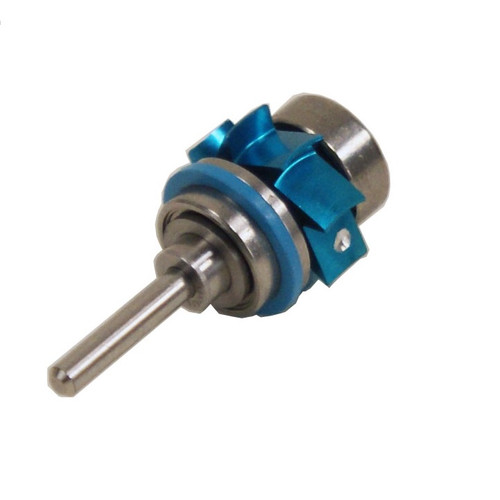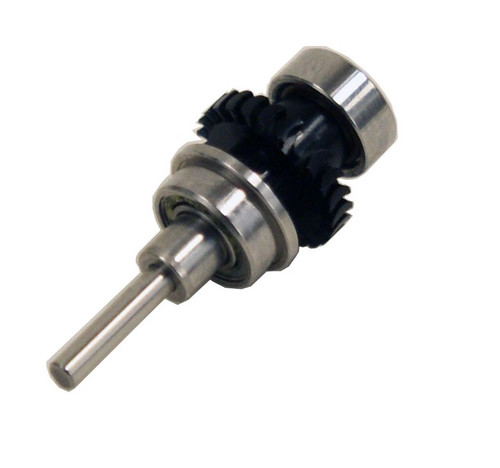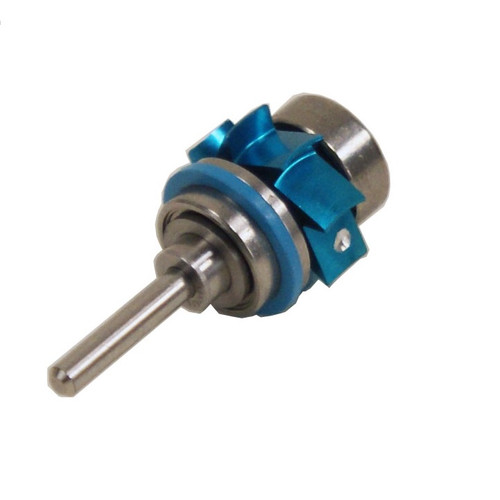

- A high-performance aftermarket turbine designed specifically for Midwest Tradition lever-type high-speed handpieces
Uses
- Direct Replacement:
- Specifically fits the Midwest Tradition Lever type handpiece
- OEM Alternative:
- Serves as a direct replacement for Midwest part #780118
- Maintenance:
- Used to restore full cutting torque and quiet operation in handpieces experiencing bearing failure or excessive vibration
Features
- Ceramic Bearings:
- Equipped with high-precision sealed ceramic bearings matched to original manufacturer specifications
- Balanced Impeller:
- Precision-machined and balanced to provide optimum torque while minimizing the high-pitched noise common in many aftermarket turbines
- Concentric Spindle:
- Features a center-less ground spindle for perfect concentricity, ensuring a smooth, true spin that often exceeds ISO standards
- Lever Chuck Assembly:
- Specifically designed for the lever-type bur release mechanism found on Tradition handpieces
- Autoclavable:
- Fully compatible with standard sterilization protocols for safe clinical reuse
Benefits
- Cost Efficiency:
- Provides a super economical alternative to expensive original manufacturer (OEM) parts, reducing overall office overhead
- Clinical Performance:
- Engineered to perform as well as, or better than, the original manufacturer turbines, ensuring reliable cutting during restorative procedures
- Improved User
- Experience: Reduced vibration and noise levels help decrease clinician hand fatigue and improve patient comfort
- Warranty:
- Typically backed by a 6-month limited warranty
Contents
- (3) Enduro High-Speed Turbines for Midwest Tradition Lever Type Highspeed Handpiece
- (1) Cap & Cap tool for installation